This article explains the difference between WAF and firewall.
What is WAF or Web Application Firewall?
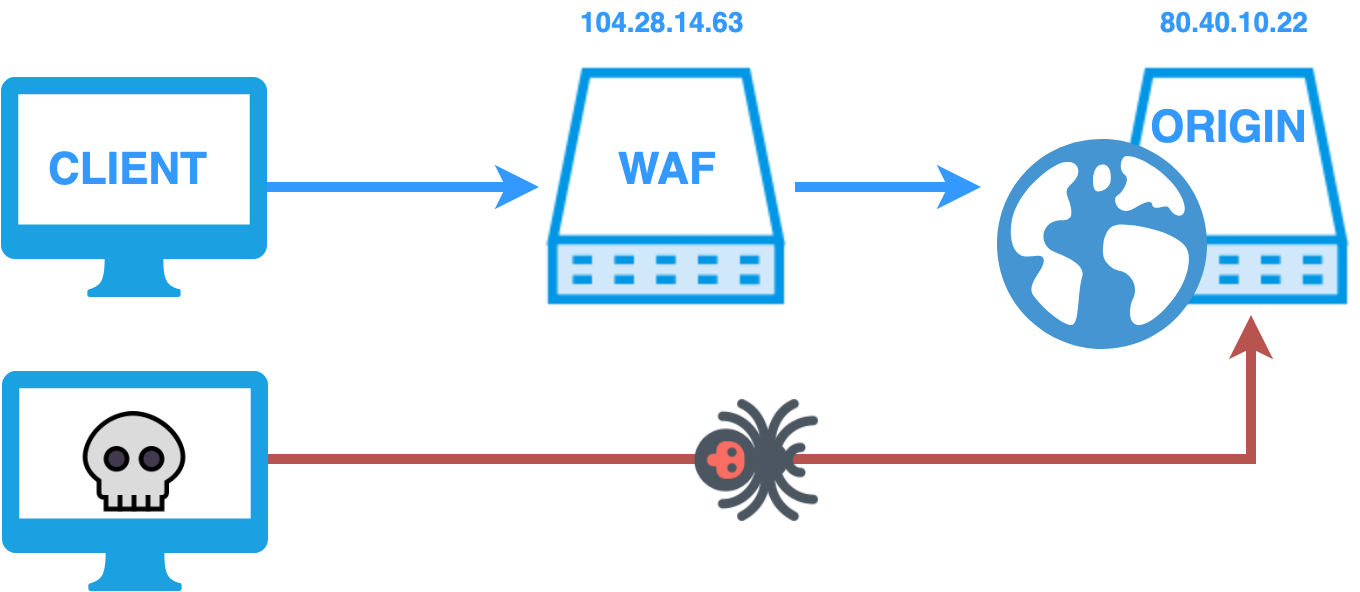
A WAF is a firewall for HTTP applications and applies a set of rules to HTTP traffic to protect it from common attacks such as XSS and SQL Injection.
WAF applications
- Firewalls generally monitor network traffic, which means an extra layer of protection that scans all site traffic and defends the network against malicious bots and multi-vector attacks.
- A WAF can monitor and filter HTTP traffic to reduce exposure to attacks, but it does not fix vulnerabilities in application code.
- WAF rules can help mitigate exploitation while a security update is prepared. Applying vendor updates to the application remains necessary.
Advantages of WAF
Here are some of the benefits that a web firewall has for users and why having this system on your site is a great long-term investment:
- Helps protect customer data
A WAF can help reduce the risk of malicious requests reaching an application, but it cannot guarantee that customer data is protected.
- WAFs and compliance
A WAF can support a broader security program, but using one alone does not guarantee HIPAA or PCI compliance.
- It saves resources
WAF rules can filter suspicious HTTP traffic, but configuration, maintenance and review are still needed.
- Helps mitigate attacks
A WAF can help filter HTTP attacks such as SQL injection and cross-site scripting. DDoS protection may require separate controls, and WAF rules do not replace security updates.
The difference between WAF and firewall
And now the main topic of this discussion; The difference between WAF and firewall. The most important differences between the two are the following:
-
They work in different ways
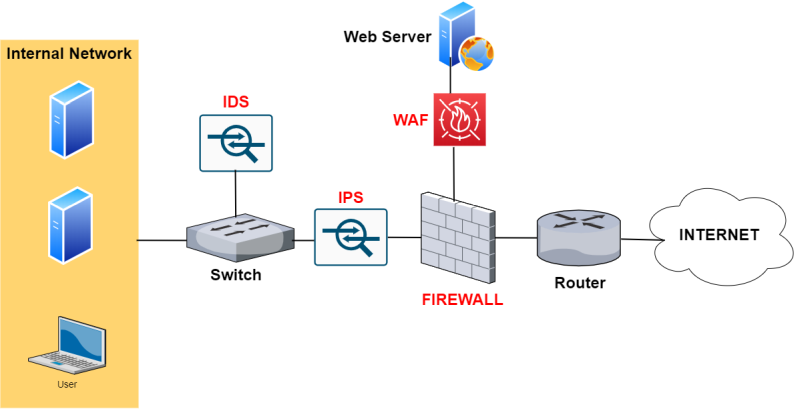
A network firewall generally controls traffic at network and transport layers. A WAF inspects HTTP requests at the application layer; deployments vary and the two can complement each other.
- They are located in different places in the network
In general, firewall is placed at the edge of the network, which is a buffer between familiar and trusted networks and unknown networks. A WAF typically sits in front of applications and can help protect them from some HTTP-based threats. This is the most basic distinction between firewall and WOF.
-
They protect the system against different threats
Generally, standard firewalls are designed for this purpose to allow or deny access to the network, which will prevent unauthorized access to the network. For example, blocking access to pornographic and suspicious content from the school computer can be mentioned as an example of a firewall. But WAF usually focuses on protecting HTTP/HTTPS applications and servers to prevent them from being compromised. such as XSS and DDoS threats.
-
They focus on different layers of the OSI model
The Open Systems Interconnection or OSI layer represents the internal tasks and functions of the standard network, and is actually considered a road map of the network. Firewalls focus on Layer 3 (Network) and Layer 4 (Transport) of the OSI model. Layer 3 is usually about transferring packets between nodes in the network, and layer 4 is about transferring data from a source to a destination host. While the main focus of the web application firewall is on layer 7 (applications), which are closer to the user. Layer 7 is generally the software or interface with which the user interacts with the network.
-
They are different in terms of access control
A WAF can allow, block or challenge HTTP requests based on rules, while a network firewall controls traffic between networks. Neither replaces application authentication and authorization.
-
Different algorithms in the difference between WAF and firewall
Since firewall and WAF are different in terms of design and performance, the user might expect that these two have different algorithms, which is completely correct. WEF uses Anomaly Detection Algorithms, Heuristic Algorithms and Signature Based Algorithms. But standard firewalls use proxy algorithms, packet-filtering algorithms, and stateless/stateful inspection algorithms.
-
They implement DDoS protection at different points
Distributed Denial of Service or DDoS attacks are a type of attack that disrupts a network. This attack, as the name suggests, prevents access to the network by dumping an extra load on network access points. Some firewall products provide DDoS controls, but dedicated mitigation may also be needed; capabilities depend on the product. As WAF primarily deals with applications, it provides DDoS protection at the application layer, which is layer 7 of the OSI model. But standard firewalls take care of this against layer 3 and 4 of the network.
-
They have different operating modes
WAF works in two different modes:
- Passive mode : In monitoring mode, a WAF can log matching requests without necessarily blocking them; exact behavior depends on the product and configuration.
- Active Inspection Mode : In active inspection mode, a WAF evaluates traffic against configured rules and can block matching requests; it cannot protect against every threat.
-
The standard firewall has two modes
- Routed Mode : This mode, which is the default firewall, implements static and routing protocols on level 3 and works like a network router.
- Invisible mode ( Transparent Mode ): It works only on layer 2 and because of the connection of interfaces, it provides the possibility of sending invisible data and completely bypasses layer 3.
-
There are different program protection levels
Just as these two firewalls differ in terms of design, function and location, they also differ in terms of the type of application-level protection. The firewall operates at layer 3 and 4 of the model and does not pay much attention to the application layer, which allows it to transfer data between networks. But the main task of WAF is to protect the layer 7 model or the application layer of the network, helping protect applications and interfaces that process web requests.
-
They have different uses
A WOF is placed in an area connected to the Internet and protects HTTPS/HTTP applications and servers. The purpose is to protect servers and applications. While the firewall means to protect each user as well as the network of people. A firewall is an effective element, but it generally takes care of the basic levels of the network. That’s why WAF is included to further protect the multiple layers of the network. With multiple firewalls, the network will be stronger and more secure.
A note on the difference between WAF and firewall
In this article, we have tried to explain the difference between WAF and firewall. Firewall and Web Application Firewall (WAF) are completely different in terms of functionality and design to make the network infrastructure secure and resilient for users. Knowing these differences will help you design and implement the best scenario for your business.